Why Metro Rail is NOT the Solution for Every City
Description
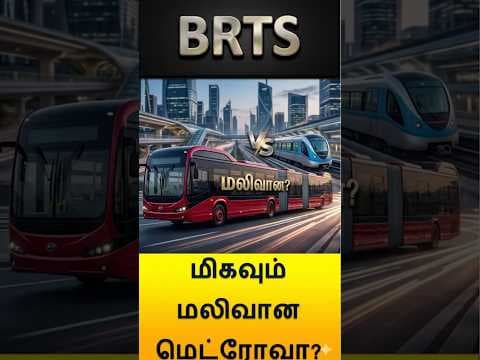
Is a Metro Rail always the best solution for a growing city, or is it sometimes an expensive mistake? While many dream of having a Metro in their hometown, the decision to build one isn't based on desire—it's based on complex science, mathematics, and urban economics. In this video, we dive deep into how transit planners determine the right "Mass Rapid Transit System" (MRTS) for a city. We explore the concept of Mixed Traffic, where private vehicles and public buses compete for the same limited road space, and why this leads to the congestion we face every day. Key Topics Covered: The Problem of Mixed Traffic: Why adding more buses to existing roads often fails to solve congestion. What is MRTS?: An introduction to systems that move large volumes of people rapidly and efficiently. Understanding PHPDT: We explain Peak Hour Peak Direction Traffic, the "golden metric" used to decide if a city needs a bus, a tram, or a heavy metro. Spatial Efficiency: Why 100 people in one bus is better for a city than 100 people in 100 cars. Diverse Transit Solutions: * BRTS (Bus Rapid Transit): High-capacity "Metros on Road" (e.g., Bogota’s TransMilenio). Tramways: Perfect for last-mile connectivity in dense city centers. Water Metros & Ropeways: Innovative solutions for cities with unique geographies like Kochi or La Paz. The 4 Pillars of Planning: How Capacity, Cost, Geography, and Future Growth projections dictate the future of your city. #MetroRail #UrbanPlanning #TrafficSolution #TransitScience #CivilEngineering #PublicTransport #BRTS #SmartCities #Sustainability #AayudhamSeivom